
By Stefania Tudorache | APIDI, Portugal
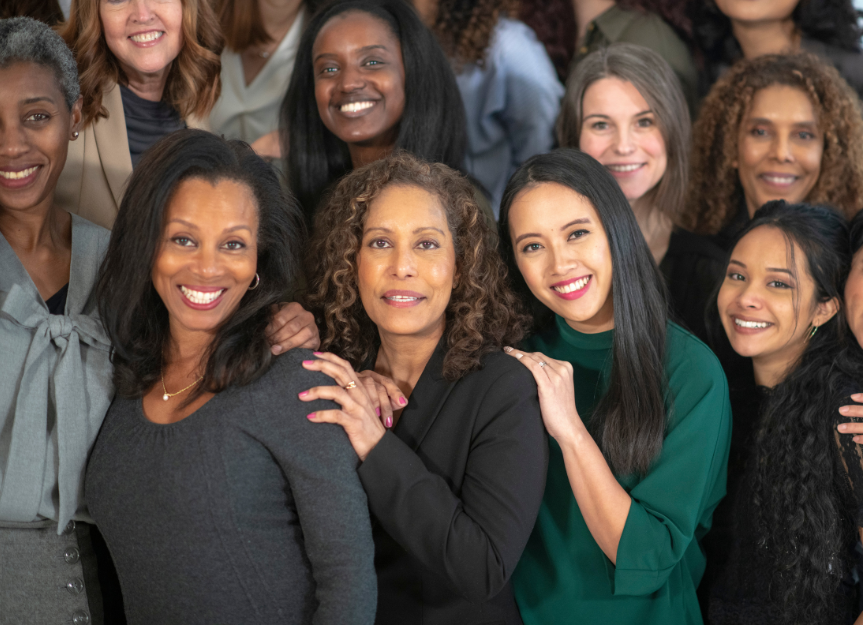
Refugee women arrive in Europe with skills, ambition and resilience, yet often face a steep climb into stable work. Structural barriers such as limited recognition of qualifications, language gaps, childcare responsibilities and restricted access to finance, slow their integration into jobs and business ownership. European research shows these obstacles clearly and points to one central reality: when targeted support is available, refugee women move quickly from vulnerability to economic contribution and become important agents of local labour-market renewal.
Practical pathways to progress
Practical, well-designed interventions make the difference. Microfinance and tailored business coaching, for example, have enabled people with informal trades or small-scale crafts to re-establish livelihoods. A striking case reported by UNHCR shows how an Afghan tailor in France reopened a sewing studio after receiving a start-up loan and training from ADIE, illustrating that small, flexible loans combined with mentoring can translate into sustainable micro-enterprises. Evidence from practice reinforces a wider academic insight: refugee women’s entrepreneurship is not only about individual agency but about the interaction between personal strengths and enabling systems: training, advice, networks and access to capital.
Scaling solutions through policy and support
State and EU instruments matter because they scale what works. The Asylum, Migration and Integration Fund (AMIF) continues to prioritise projects that strengthen labour-market integration for migrant women, including support that covers language, vocational training and measures that reduce care-related obstacles for participation. At member-state level and through EU calls, policymakers can amplify small successes into broader, replicable pathways to employment and self-employment.
Private sector and philanthropic commitments are adding real capacity. Generali’s Human Safety Net and partners publicly pledged large-scale training to match refugees with jobs across several countries; such collaborations create direct routes from training into vacancies in sectors that need labour. Similarly, employer-facing initiatives and mentoring schemes show how business engagement opens doors: companies that commit mentors and recruitment pipelines give refugee women practical entry points to paid work and professional networks.
Mentoring and peer support repeatedly appear in the evidence as high-value, low-cost measures. Programmes that pair experienced professionals with refugee women improve confidence, knowledge of local labour norms and job-search effectiveness. The Entrepreneurial Refugee Network (TERN) and similar UK-based initiatives demonstrate that tailored mentoring, combined with legal and financial advice, accelerates the transition from idea to income. In short, mentoring converts potential into practical steps: CVs, interviews, basic accounting and the soft skills employers expect.
Local initiatives such as the EmpowerHer project illustrate this approach in practice by combining job-focused language and vocational training, innovative digital tools and capacity-building for adult educators to open accessible routes into employment and self-employment for migrant women.

Evidence from research
Policy briefs and empirical reviews underscore the return on investment of gender-sensitive integration measures. The European Parliamentary Research Service summarises how labour-market inclusion policies that address specific barriers faced by women: childcare, recognition of qualifications, flexible training timetables yield stronger and more durable employment outcomes for refugee women. The UNHCR Annual Report documents broader humanitarian and protection work while highlighting how socioeconomic inclusion is central to durable solutions for refugees.
During the COVID-19 pandemic, refugee women faced renewed and intensified challenges in accessing work like disrupted training, closed services, and reduced social contact. Yet a study examining refugee women and support organisations during this time shows how action, reaction and, at times, resignation shaped innovative responses: digital training pivoted online, peer networks stepped in virtually, and hybrid learning formats emerged to sustain integration efforts. This adaptability illustrates both the resilience of refugee women and the potential of flexible programme design to withstand shocks.
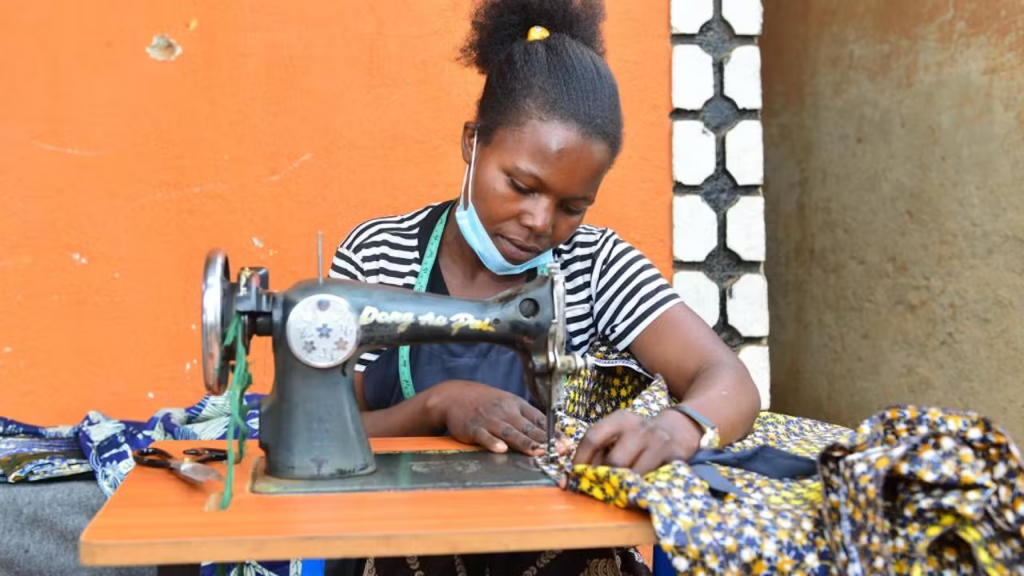
Refugee women’s journeys also show the power of tailored training at the local level. In Uganda, Angelique Kahindo, a Congolese refugee and mother of six, joined the ILO-PROSPECTS project after struggling to survive on limited food rations. Through vocational training in sewing, combined with practical lessons in marketing, accounting, and customer care, she was able to open her own workshop. Today she provides for her family and sends her children to school, proving how skills development linked to market opportunities can restore both dignity and self-reliance.
Practical and focused change
Taken together, these sources point to a focused, practical agenda for change: prioritise small, blended finance (microloans plus coaching) to convert skills into micro-businesses (as ADIE–UNHCR illustrates); scale women-centred training and job-matching through EU funding such as AMIF; mobilise employers and philanthropic partners to offer sector-aligned training and guaranteed interviews or placements; embed mentoring and legal and administrative support so women can navigate registration, taxation and certification with confidence; and design supports informed by research that combine economic, social and psychological dimensions of empowerment.
From survival to success
Refugee women are already reshaping local economies: reopening workshops, starting micro-enterprises, filling labour shortages and bringing new services to neighbourhoods. The lessons are straightforward and urgent. Focused funding (AMIF), practical finance, employer engagement and mentoring turn barriers into pathways. For policymakers, NGOs and employers alike, the task is to scale these precise measures so that more refugee women can move from surviving to thriving, a win for families, communities and Europe’s labour market.
References:
ACNUR. (2023). Informe anual 2022. unhcr.org/sites/default/files/2023-07/2305336E_UNHCR-AR-2022_web_V3.pdf
Adie. (2020, June 22). ADIE and UNHCR partner to support refugee entrepreneurs in France. UNHCR. unhcr.org/europe/news/stories/microcredit-support-helps-afghan-designer-france-open-studio
Al-Hamad, A., Gare, C., Yasin, Y. M., & Metersky, K. (2024). Refugee women’s entrepreneurship: A concept analysis. International Journal of Social Science Research and Review, 7(4), 324–340. researchgate.net/publication/379907280_Refugee_Women’s_Entrepreneurship_A_Concept_Analysis
Bešić, A., & Aigner, P. (2023). Action, Reaction and Resignation: How Refugee Women and Support Organisations Respond to Labour Market Integration Challenges during the COVID-19 Pandemic. Journal of International Management, 29(2). sciencedirect.com/science/article/pii/S1075425323000285
European Commission. (2025, August 6). Asylum, Migration and Integration Fund (AMIF) 2025 call for proposals. ec.europa.eu/info/funding-tenders/opportunities/docs/2021-2027/amif/wp-call/2025/call-fiche_amif-2025-tf2-ag-inte_en.pdf
Generali. (2023, 19 de junio). Generali pledges to provide training to over 5,000 refugees at TENT European Business Summit. thehumansafetynet.org/stories
ILO Voices. (2023, February 28). As a refugee, my new skills have given my family hope [Refugee voices article]. International Labour Organization. voices.ilo.org/stories/as-a-refugee-my-new-skills-have-given-my-family-hope
Orav, A. (2022). Labour market integration of asylum-seekers and refugees (EPRS Briefing PE 690.651). European Parliamentary Research Service. europarl.europa.eu/RegData/etudes/BRIE/2021/690651/EPRS_BRI(2021)690651_EN.pdf
TERN (The Entrepreneurial Refugee Network). (2021). Supporting refugee entrepreneurs in the UK. wearetern.org
Tent Partnership for Refugees. (2021, noviembre). How companies can mentor refugee women in Europe. tent.org/wp-content/uploads/2021/11/Tent_How-to-Mentor-Refugee-Women_Web.pdf